
Tanzania is a country rich in culture, history, and traditions that have been preserved for generations. With more than 120 ethnic groups living together peacefully, Tanzania offers one of the most diverse cultural experiences in Africa. From ancient tribes and historic trade routes to traditional music, food, and daily life, Tanzania’s cultural heritage is as fascinating as its wildlife.
A cultural and historical journey through Tanzania allows travelers to understand the people, their stories, and the deep connection between land, community, and tradition
Tanzania’s history stretches back millions of years. Some of the world’s earliest human remains were discovered at Olduvai Gorge, making Tanzania one of the most important places in human history.
Over time, Tanzania became a crossroads for trade between Africa, the Middle East, and Asia. Arab traders settled along the coast, especially in Zanzibar, bringing Islam, architecture, and Swahili culture. Later, European influence arrived during German and British colonial rule, shaping parts of modern Tanzania.
In 1961, Tanzania gained independence and later united with Zanzibar to form the United Republic of Tanzania. Today, the country is known for its peace, unity, and respect for cultural diversity
Tanzania is home to many ethnic groups, each with its own language, customs, and traditions. Cultural visits allow travelers to meet local communities and learn directly from them.
Some of the well-known tribes include:
The Maasai, famous for their colorful clothing, traditional dances, and strong cultural identity
The Hadzabe, one of the last hunter-gatherer tribes in Africa
The Chagga people, known for farming and coffee cultivation on the slopes of Mount Kilimanjaro
The Sukuma, the largest ethnic group in Tanzania, known for farming and traditional music
These communities continue to live according to traditions passed down through generations.
Swahili culture plays a major role in Tanzania’s identity, especially along the coast and in Zanzibar. It is a blend of African, Arab, and Asian influences.
Swahili culture is reflected in:
The Swahili language, spoken widely across East Africa
Traditional architecture with carved wooden doors
Local cuisine featuring spices, coconut, rice, and seafood
Music styles such as Taarab
Islamic traditions and historic mosques
Stone Town in Zanzibar is the heart of Swahili history and a UNESCO World Heritage Site.
Music and dance are important parts of Tanzanian life. Each tribe has its own rhythms, instruments, and dances used for celebrations, ceremonies, and storytelling.
Cultural tours often include:
Traditional drumming and dance performances
Handcrafted art such as carvings, beadwork, and paintings
Visits to local markets and craft centers
Storytelling sessions with elders
These experiences offer a deeper understanding of Tanzanian life beyond wildlife safaris.

Some of the most important cultural and historical sites in Tanzania include:
Olduvai Gorge, known as the cradle of mankind
Stone Town in Zanzibar
Bagamoyo, a historic coastal town and former trade center
Kilwa Kisiwani, ancient ruins of a powerful Swahili city
Local villages near Mount Kilimanjaro and Lake Eyasi
Each location tells a different chapter of Tanzania’s story.
Learn directly from local communities
Understand Tanzania beyond wildlife and landscapes
Experience authentic traditions and daily life
Support local people through responsible tourism
Combine culture with safari or beach holidays
Cultural tours add meaning and connection to your journey.


Take a look at our expertly designed trips on the website and narrow it down to your favorite, or contact us and let us suggest an itinerary if you prefer. ...Don't forget to look at our most popular extensions to get some ideas for other activities you can experience while you're here. Our "pre-designed" trips are wonderful trips that have become client and guide favorites because they include many of the highlights you might expect to see while you are in Tanzania. It's likely that one of these trips will catch your attention, and get you excited about taking the next step

Connect with us to plan the perfect adventure. Since we own the company, and manage every detail of your itinerary, we are able to accommodate many ...special requests. We don't like cookie-cutter experiences any more than you do, and that's why we will work directly with you to craft an Africa trip that is truly special. Once you're completely satisfied with your custom itinerary we make it safe and easy to confirm your reservation. Now it's time to move on to the last, and arguably the most important step, the experience.
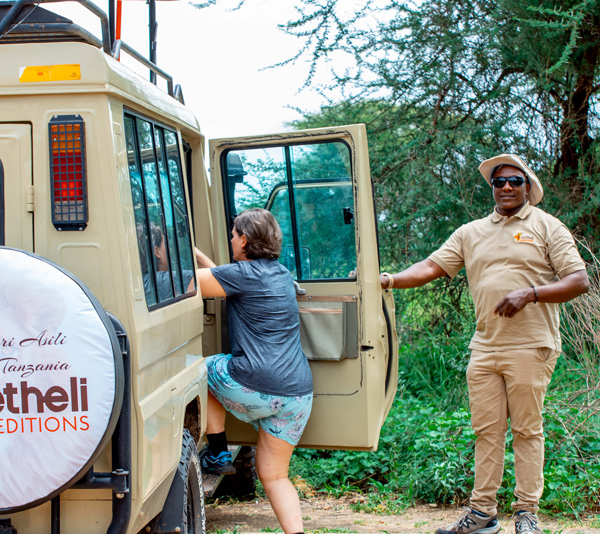
We've worked with you in Step #2 to plan the perfect itinerary and have collected everything we need to ensure a smooth arrival here in Tanzania. ...Now it's time for you to sit back and relax while we do the work (unless you're climbing Kilimanjaro with us, in which case you still have some work to do). Regardless, we'll be with you every step of the way to ensure that the only surprises will be the kind you want to have. We'll be here waiting for you, and look forward to welcoming you to our beautiful Tanzania.